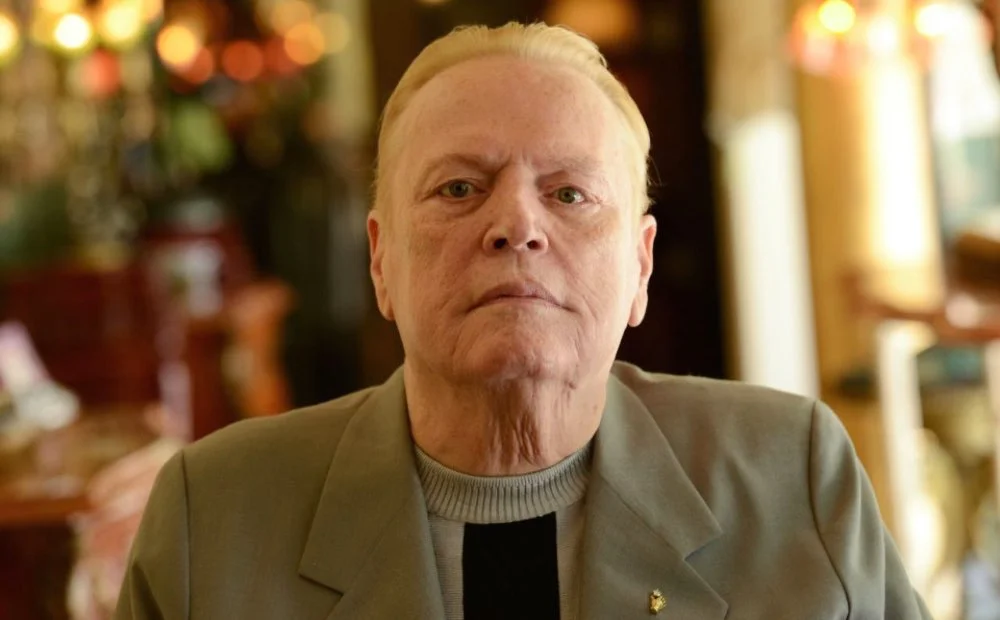
Publisher. Provocateur. First Amendment fighter.
Larry Flynt
November 1, 1942 - February 10, 2021
The Kentucky-born outsider who turned a handful of Ohio clubs into Hustler, built one of America's most controversial adult media empires, and forced courts to defend speech that many people found offensive.
Larry Flynt was never a comfortable cultural figure. To supporters, he was a stubborn civil-liberties fighter who dragged taboo subjects into court and often won. To critics, he was a provocateur whose magazine pushed shock, sex, satire, and bad taste past polite limits. Either way, Flynt became impossible to ignore.
His story moves through strip clubs, obscenity prosecutions, a near-fatal shooting, Supreme Court history, political scandal-hunting, and the transformation of adult publishing from print magazines to video, casinos, retail, and the internet. Flynt liked to present himself as an outsider, but his legal battles shaped mainstream speech law far beyond Hustler itself.
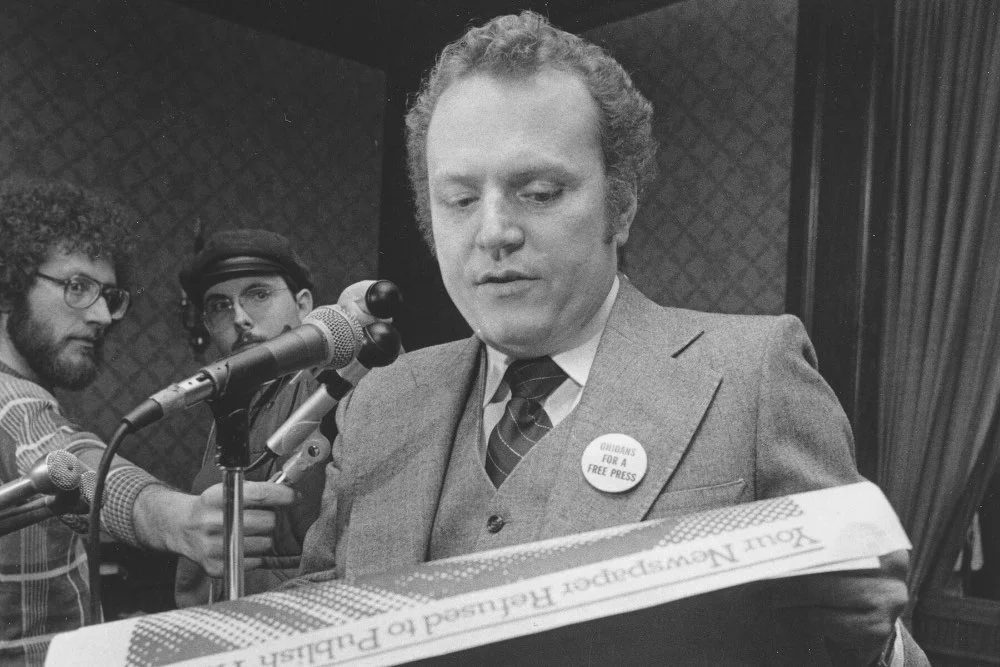
From Kentucky poverty to Ohio nightlife
Flynt was born in Lakeville, Kentucky, and grew up in a poor Appalachian family. Before publishing made him famous, he lived several very different lives: teenage runaway, Army enlistee using a false birth certificate, factory worker, Navy radar operator, bootlegger, bar owner, and eventually club entrepreneur. The Navy chapter is one of the stranger early details in his biography: Flynt served aboard the USS Enterprise and was reportedly on radar duty during the recovery operation for John Glenn's space capsule.
In 1965, Flynt used savings to buy his mother's bar in Dayton, Ohio. He renovated it, improved the business, and used the profits to buy more bars. By the late 1960s he was building a club circuit around the Hustler name, first in Dayton and then in other Ohio cities. Those clubs became the seed of the magazine.
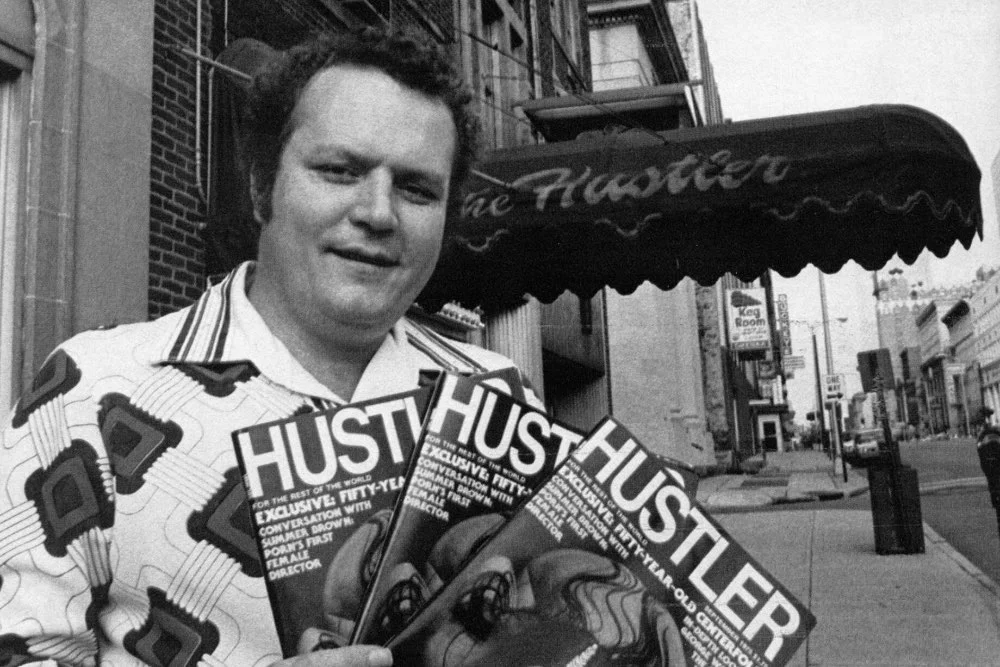
The newsletter that became Hustler
Hustler did not begin as a national magazine. It started in January 1972 as a small newsletter for Flynt's clubs. The newsletter grew from a promotional handout into a thicker publication, and the recession after the 1973 oil crisis pushed Flynt toward a bigger gamble: turning the club newsletter into a nationally distributed adult magazine.
The first issue of Hustler appeared in July 1974. Early issues struggled, and distributors were not always eager to carry a magazine that was more explicit than Playboy or Penthouse. Flynt's formula was different: less polished fantasy, more working-class provocation, more crude humor, more political anger, and more willingness to offend.
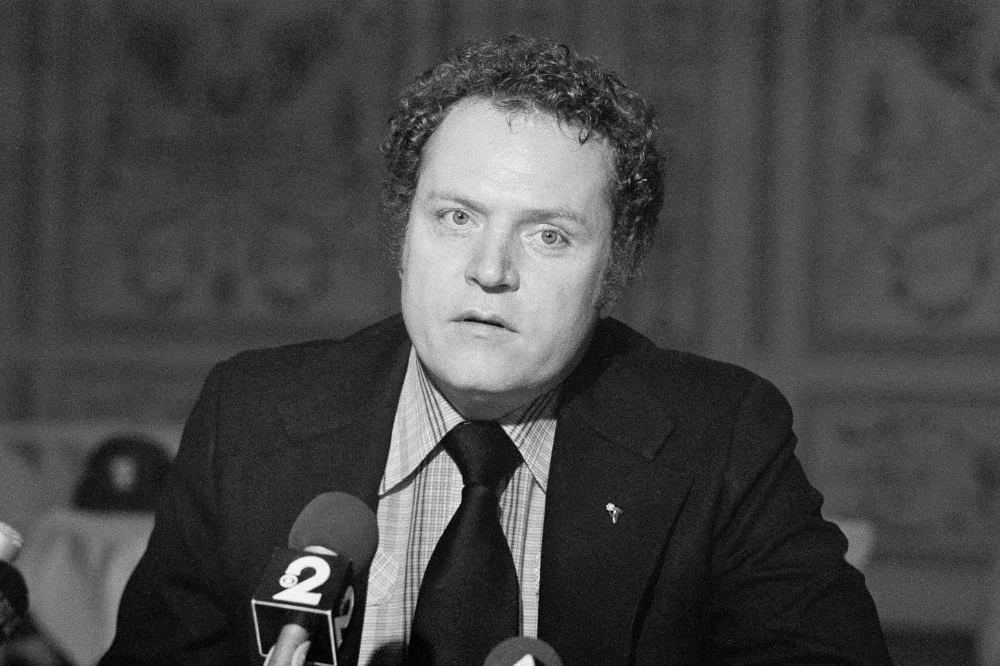
The Jacqueline Onassis issue and national attention
Hustler's breakout moment came in 1975, when Flynt published paparazzi photos of former First Lady Jacqueline Kennedy Onassis. The issue became a massive commercial event and turned Hustler from a risky adult magazine into a national scandal machine. The episode also established Flynt's public brand: aggressive, opportunistic, legally combative, and very difficult to embarrass.
That formula made him rich and famous, but it also made him a permanent target for prosecutors, anti-pornography campaigners, religious conservatives, feminists, and media critics. Flynt rarely tried to appear respectable. He preferred to argue that the First Amendment mattered most when the speech was ugly, offensive, or unwanted.
Courts, obscenity battles, and the First Amendment
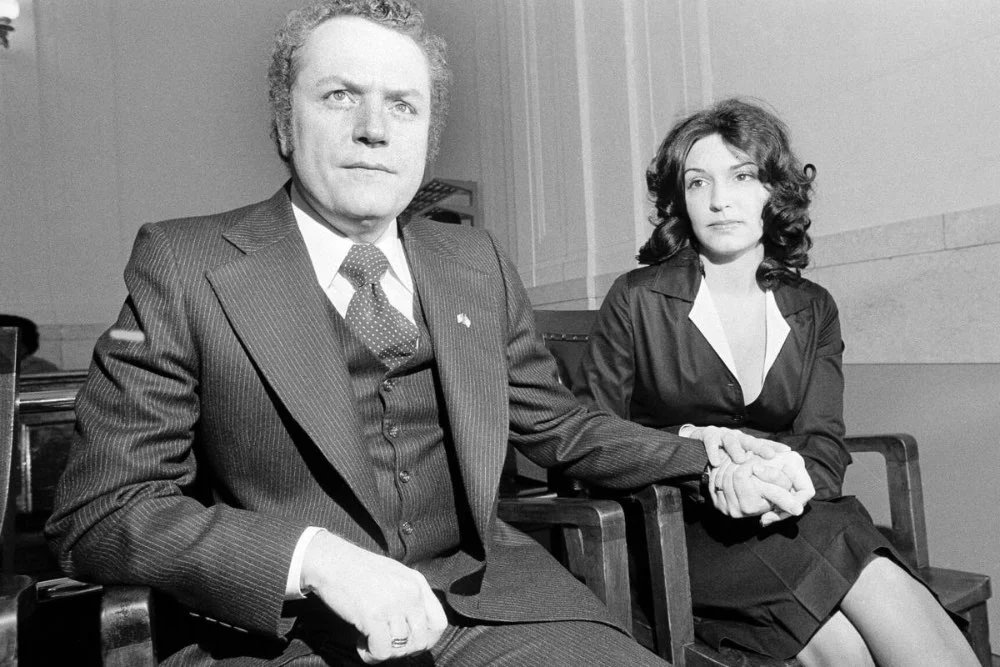
Flynt's legal history was long and chaotic, but the defining case was Hustler Magazine, Inc. v. Falwell. After Hustler published an outrageous parody aimed at televangelist Jerry Falwell, Falwell sued for libel, invasion of privacy, and emotional distress. The case reached the U.S. Supreme Court, which ruled in 1988 that public figures could not use emotional distress claims to punish parody that could not reasonably be understood as factual.
The decision mattered well beyond adult publishing. It strengthened protection for satire, political cartoons, comedy, and harsh criticism of public figures. One of the oddest backstage twists came after the case: Flynt and Falwell, once enemies, later debated together on college campuses and exchanged friendly notes. Flynt eventually wrote that "we became friends."
"I always appreciated his sincerity even though I knew what he was selling and he knew what I was selling."
The shooting that changed everything
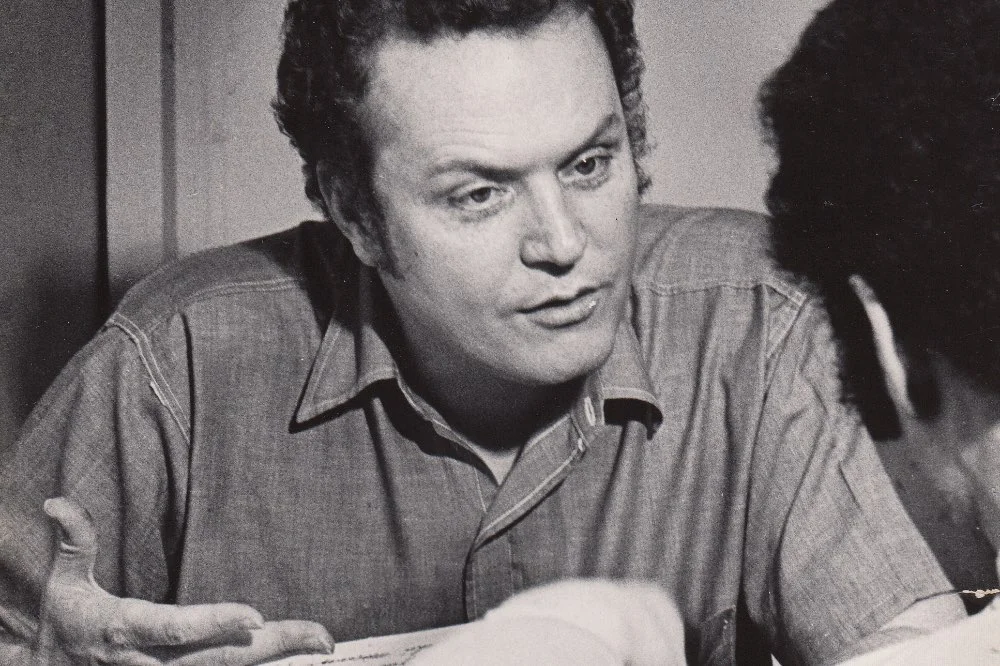
On March 6, 1978, while facing an obscenity case in Georgia, Flynt and his attorney Gene Reeves Jr. were shot outside a courthouse in Lawrenceville. Flynt survived but suffered permanent spinal cord damage and used a wheelchair for the rest of his life. White supremacist serial killer Joseph Paul Franklin later said he targeted Flynt because of an interracial photo spread in Hustler, although Franklin was never tried for the shooting.
Flynt's response to Franklin's later execution was unexpected: he opposed it. Despite the attack that left him paralyzed, Flynt argued against the death penalty, saying the state should not kill in the name of justice. It was one of several moments where his politics refused to fit neatly into a predictable box.
Politics, scandal hunting, and media theater
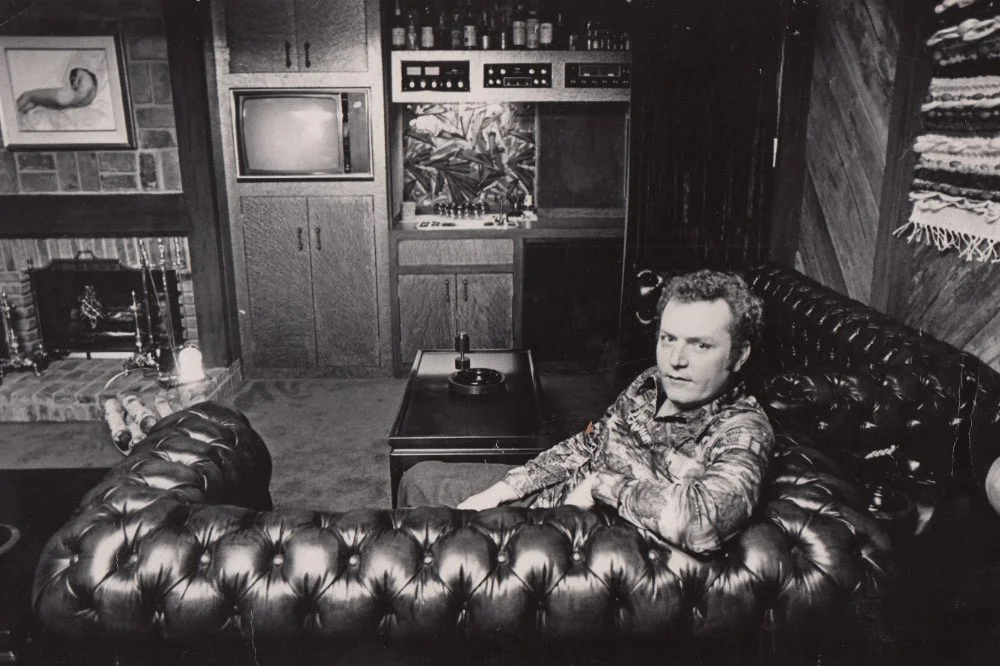
Flynt loved political theater almost as much as courtroom theater. He ran for public office more than once, including the 2003 California gubernatorial recall election, where he campaigned as a "smut peddler who cares." He also offered cash rewards for information about political hypocrisy, especially sexual scandals involving public moralists. His critics called it checkbook sleaze; Flynt called it accountability.
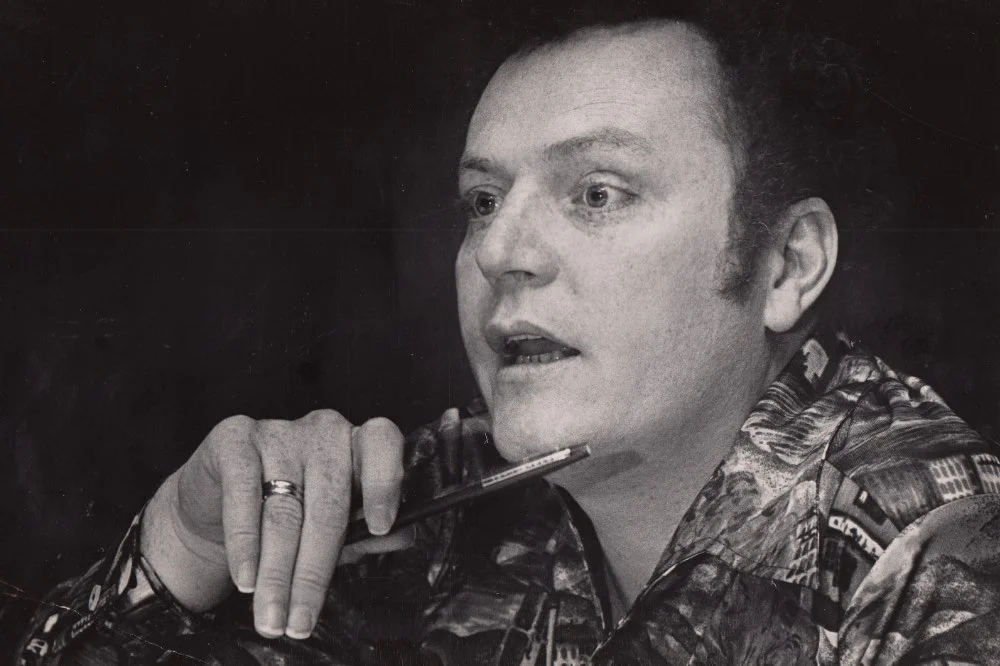
Behind the scenes, Flynt understood publicity with tabloid precision. He knew a lawsuit, a reward offer, a shocking cover, or an outrageous quote could keep his name in the news. He also understood that adult publishing was changing. In interviews, he pointed to the internet and video as the future of the business while print magazines lost their old power.
"I wouldn't give my life for anything or anyone."
Fun facts, rumors, and backstage notes
- Movie cameo: in The People vs. Larry Flynt, Flynt did not play himself. He played the judge who sentenced him.
- Falwell twist: the preacher and the porn publisher later became unlikely friendly debate partners after one of the ugliest satire cases in American legal history.
- "Hustle for God": during a short religious period in the late 1970s, Flynt reportedly spoke of using his publishing machine for God, but he later described himself as an atheist.
- Supreme Court spectacle: one widely reported courtroom incident had Flynt disrupting proceedings and turning contempt for authority into performance art.
- Conspiracy talk: Flynt sometimes suggested the 1978 shooting involved more than Franklin alone. That remained speculation, not an established fact.
- Althea Flynt: his fourth wife, Althea Leasure Flynt, was not just part of his personal life; she was also deeply connected to Hustler's image and operations before her death in 1987.
Final years and legacy
Flynt was married five times and had five children. He died from heart failure in Los Angeles on February 10, 2021, at age 78. His legacy remains contradictory: a porn publisher who degraded public taste according to his critics, a civil liberties symbol according to his defenders, and a businessman who understood that controversy could be converted into circulation, court precedent, and cultural power.
For Hustler history, Flynt is more than a name on a masthead. He is the reason the brand became a political and legal symbol. Hustler Honeys, Hustler Clubs, Hustler Hollywood, Hustler Video, and the larger LFP empire all grew from the same instinct: take the thing polite society rejects, package it loudly, and dare someone to sue.
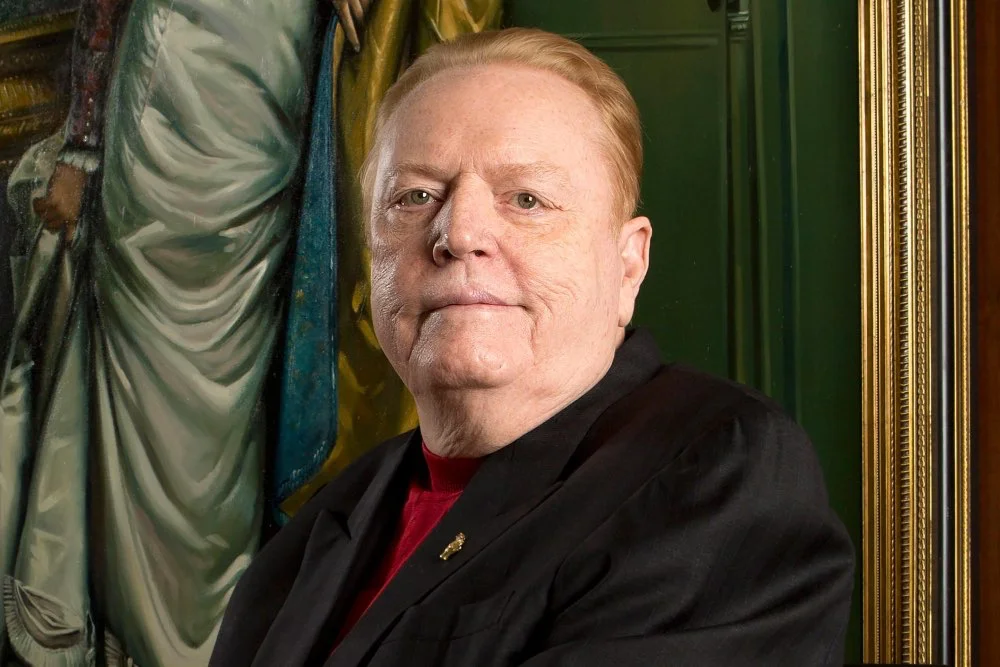
R.I.P. Larry Flynt
Source notes: biographical and legal details are based on public records and public reporting, including the U.S. Supreme Court record for Hustler Magazine, Inc. v. Falwell, public biographies of Flynt, and interviews/obituaries covering his career, the 1978 shooting, his media businesses, and his later First Amendment reputation.
Selected references: U.S. Supreme Court case record, Larry Flynt on Jerry Falwell, Wired profile, and Wired interview.